
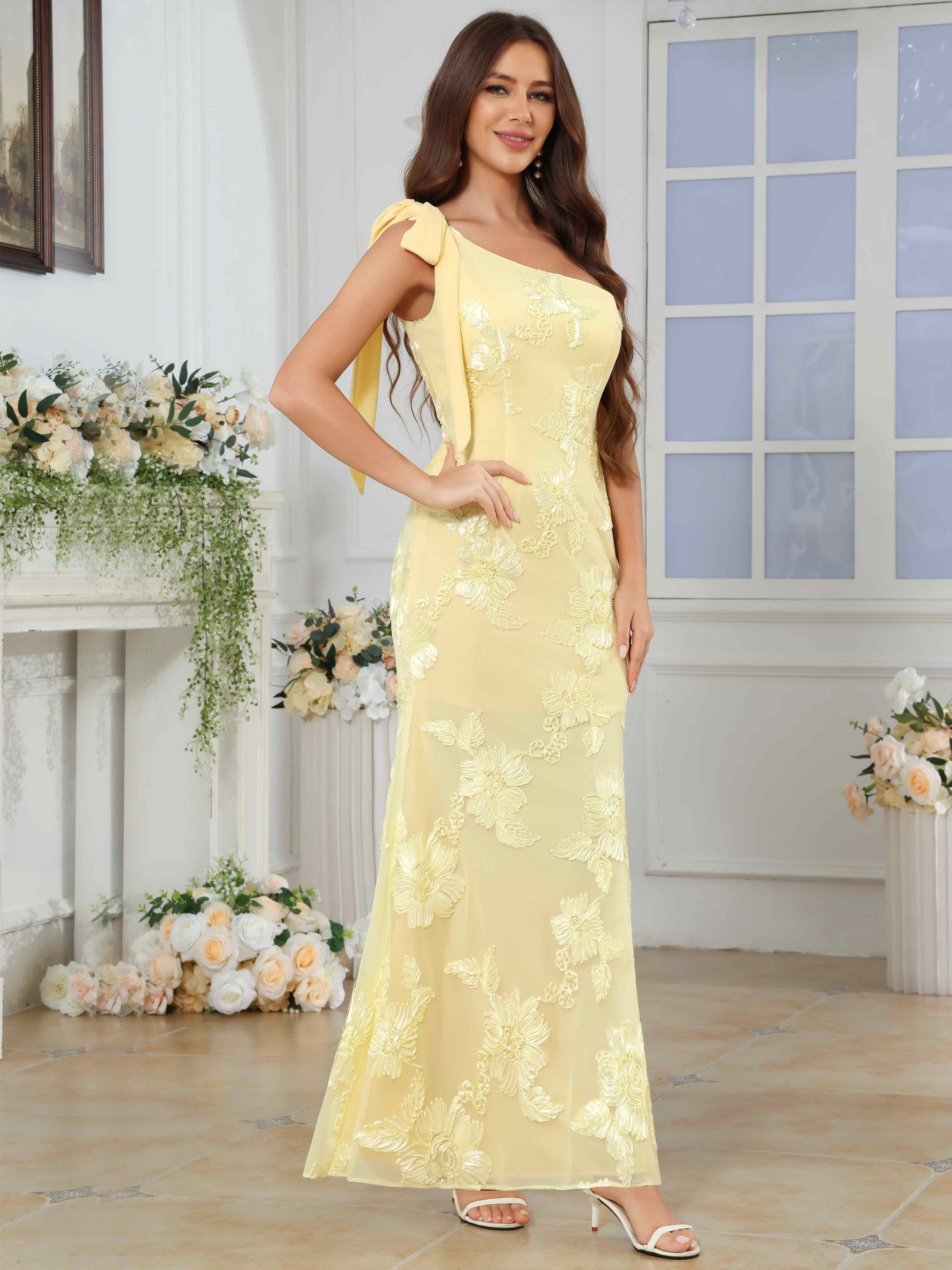
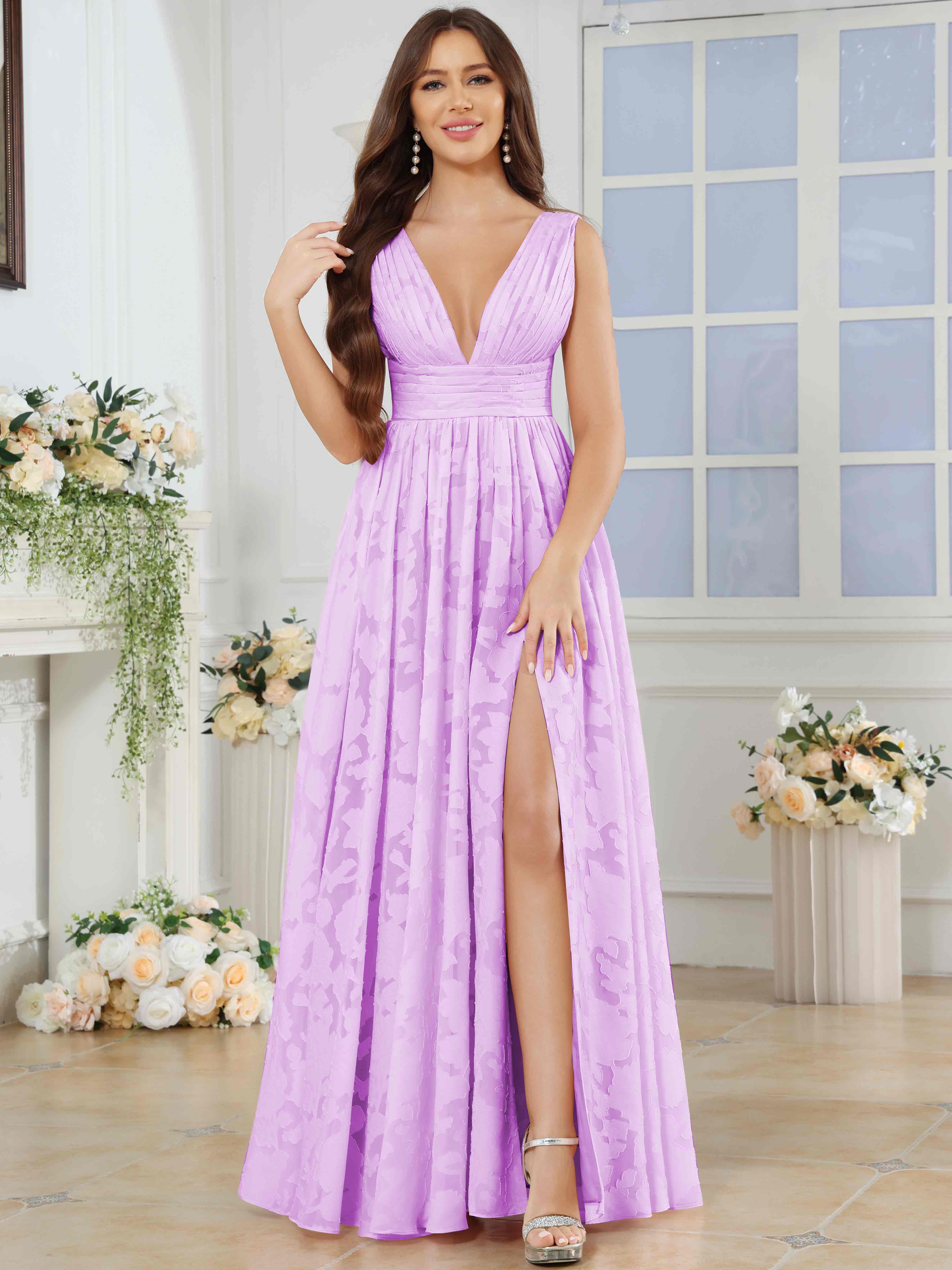
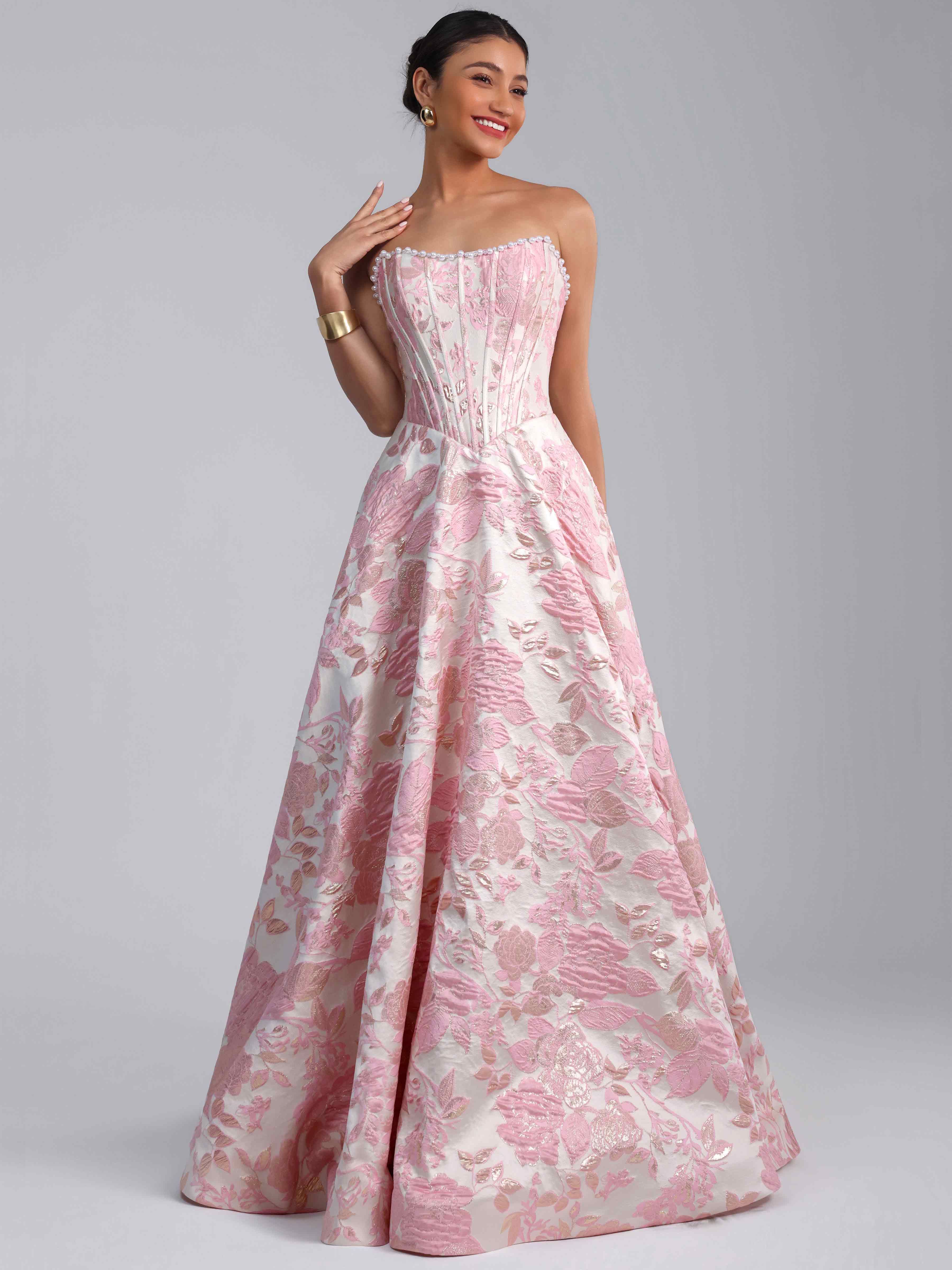
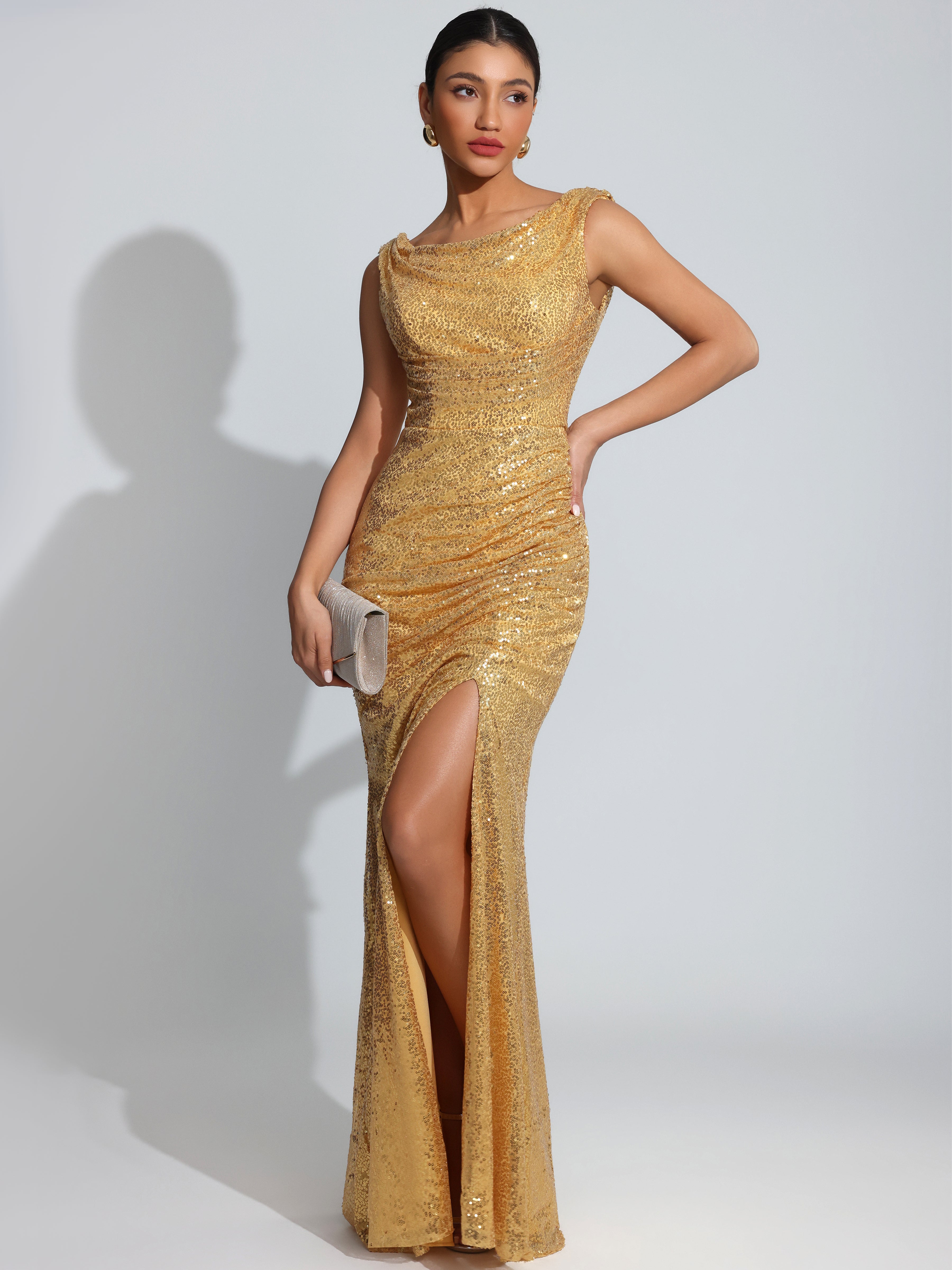
A mother of the bride dress makes far more sense once you stop shopping by what looks pretty on the hanger and start shopping by context. The venue, the time of day, and how formal the wedding is quietly decide your length, silhouette, sleeves, and fabric before you ever think about color. Work through those decisions in order and the options narrow fast, which makes the whole process calmer and much less expensive in second-guessing.
Let the Venue and Formality Lead
Start by writing down the venue and the dress code in one line: ballroom at seven, garden at four, beach ceremony followed by a restaurant dinner. That single sentence does most of the filtering for you. Formality sets the general frame, and the venue tells you what will actually work once you are standing on grass, sand, or a marble floor.
As a working rule, black-tie and evening receptions call for floor-length gowns with a polished finish. Cocktail and semi-formal weddings leave room for shorter hems and lighter fabrics. Daytime and outdoor weddings tend to read better in softer, less structured dresses. Browse the full mother of the bride collection with that frame in mind and you will spot the right tier immediately instead of scrolling through everything.
Length: Match the Hem to the Ground Under You
Length is the fastest way to look appropriate or out of place, because it signals formality before anything else does. It also decides how much you will be managing fabric all day.
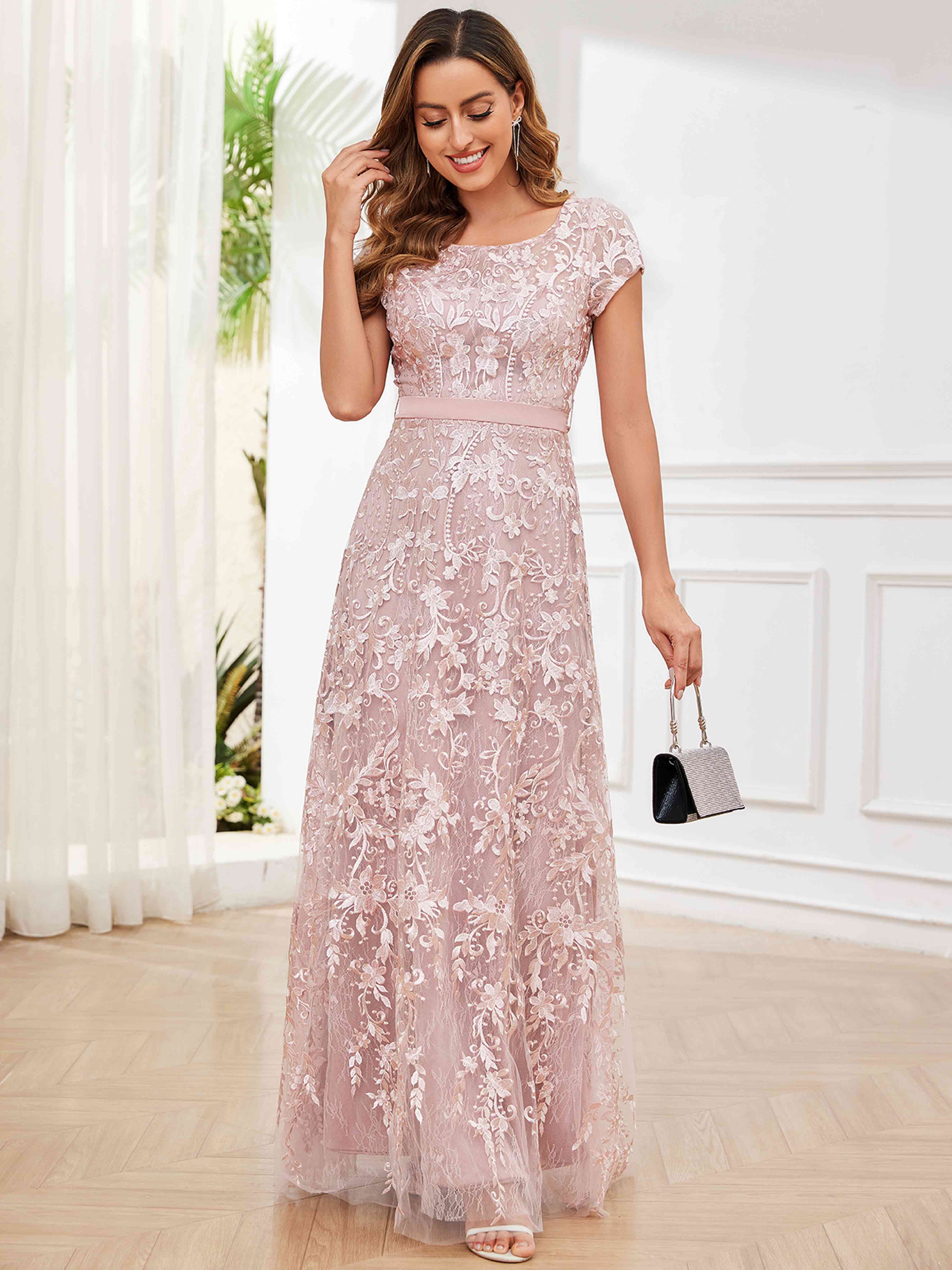
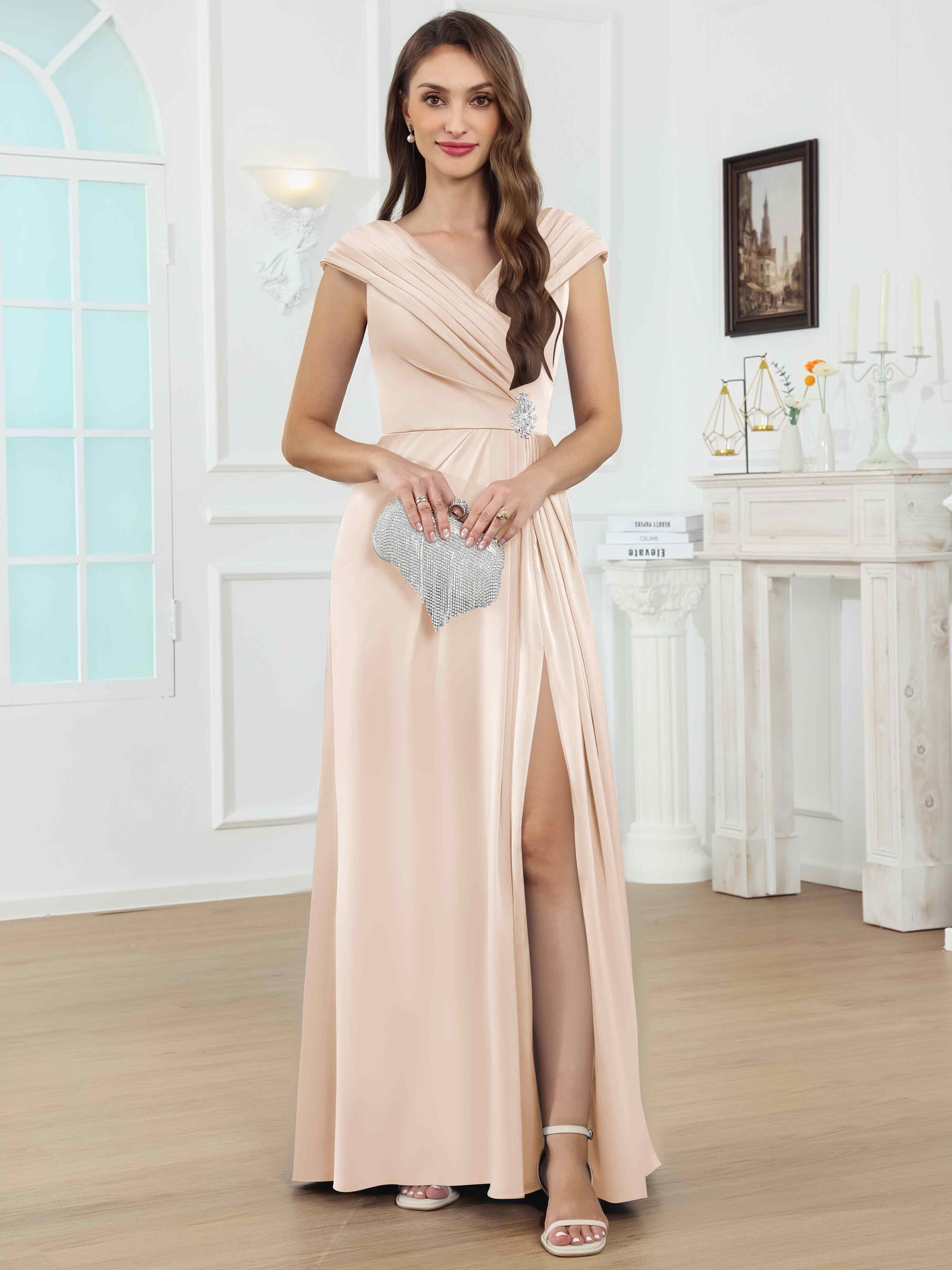
- Ballroom, hotel, country club: floor-length is the safe, elegant choice. A long hem photographs beautifully and holds up through a seated dinner. Our long mother of the bride dresses are built for exactly this setting.
- Garden, vineyard, daytime reception: tea-length and knee-to-midi hems feel right without looking casual. They also keep fabric off the ground when there is no carpet to protect it. See the tea-length styles for this tier.
- Beach, backyard, destination: a lighter long dress or a midi both work. Prioritize a hem you can walk in on an uneven surface over a train you will be managing all afternoon.
Whatever length you choose, plan shoes and hem together. A heel height you cannot comfortably walk in for four hours will show up in every photograph, and hemming after the fact adds time you may not have.
Silhouette and Sleeves: Flattery Meets Setting
Silhouette decides how formal a dress reads and how comfortable you will be through a long day. A-line cuts are the most forgiving across settings: they skim the waist, move easily, and look composed seated or standing. If the wedding leans formal and you want more structure, a mermaid or trumpet cut gives a defined shape that suits an evening celebration.
Sleeves follow the same venue logic. For a winter or black-tie wedding, long sleeves or an illusion neckline add coverage and polish. For an outdoor summer ceremony, cap sleeves or sleeveless styles keep you cool. If the day moves from ceremony to dance floor, consider a style you can layer with a shawl or wrap rather than committing to one level of coverage all night.
Fabric Sets the Tone
Fabric is where formality shows up in close-up conversation and in photographs, and it also decides how you will feel after three hours of celebrating.
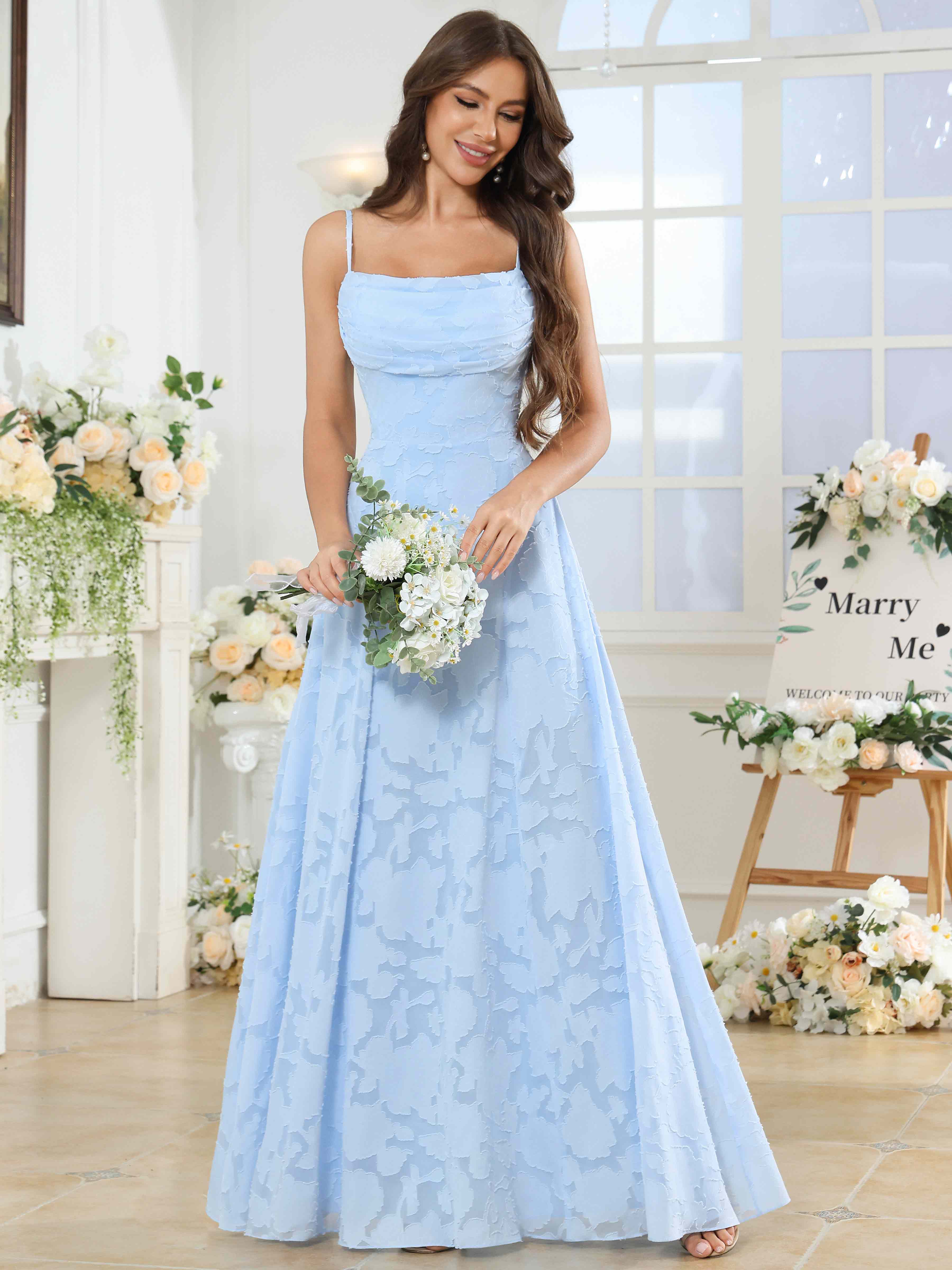
- Chiffon: light, airy, easy to move in. Ideal for daytime, warm weather, and outdoor venues.
- Lace: textured and traditionally formal. A lace bodice reads well at a classic church or ballroom wedding. Explore our lace mother of the bride dresses for this look.
- Satin: smooth with a soft sheen, best suited to evening events where the lighting will flatter it.
- Sequin or beaded overlays: clearly celebratory and clearly dressy. Save them for night celebrations rather than a morning ceremony.
Also weigh the season. A heavy satin in a crowded summer venue without good air conditioning is a practical problem, not just a style one.
Coordinating with the Bridal Party
Your goal is to complement the wedding palette without matching the bridesmaids exactly. Ask the couple two questions early: what color are the bridesmaids wearing, and how formal is the overall look. From there, choose a shade that sits beside their color rather than competing with it, and keep your level of embellishment in the same range as the bridal party so you never read as overdressed or underdressed.
Texture is another quiet way to coordinate. If the bridesmaids are in chiffon, a chiffon or lace dress in a different hue will feel intentional rather than accidental. Finish the look with thoughtful details from accessories, and confirm your picks against the bridal party before ordering rather than after.
Ordering Timeline
Give yourself more runway than you think you need. A practical sequence looks like this:
- Four to six months out: confirm the dress code and venue, gather the bridal party colors, and build a shortlist of lengths and silhouettes you like.
- Three to four months out: settle on a dress and place the order, so there is room for any adjustments that come up.
- Six to eight weeks out: try the dress on with your actual shoes and undergarments, and handle alterations while there is still time to revise.
- Two weeks out: do a final full dress rehearsal, accessories included, and then stop making changes.
If the date is closer than that, start with the styles you can evaluate quickly, keep your alterations list short, and reserve your energy for the parts of the day that matter more than a perfect hem.
Final Thoughts
Let the venue pick the length, let the formality pick the silhouette, and let the season pick the fabric. Coordinate with the bridal party on color and polish, then order early enough that fittings feel calm rather than rushed. Do those four things and the right dress becomes a short list instead of an overwhelming one.